


「The Okawa 1825 Project」
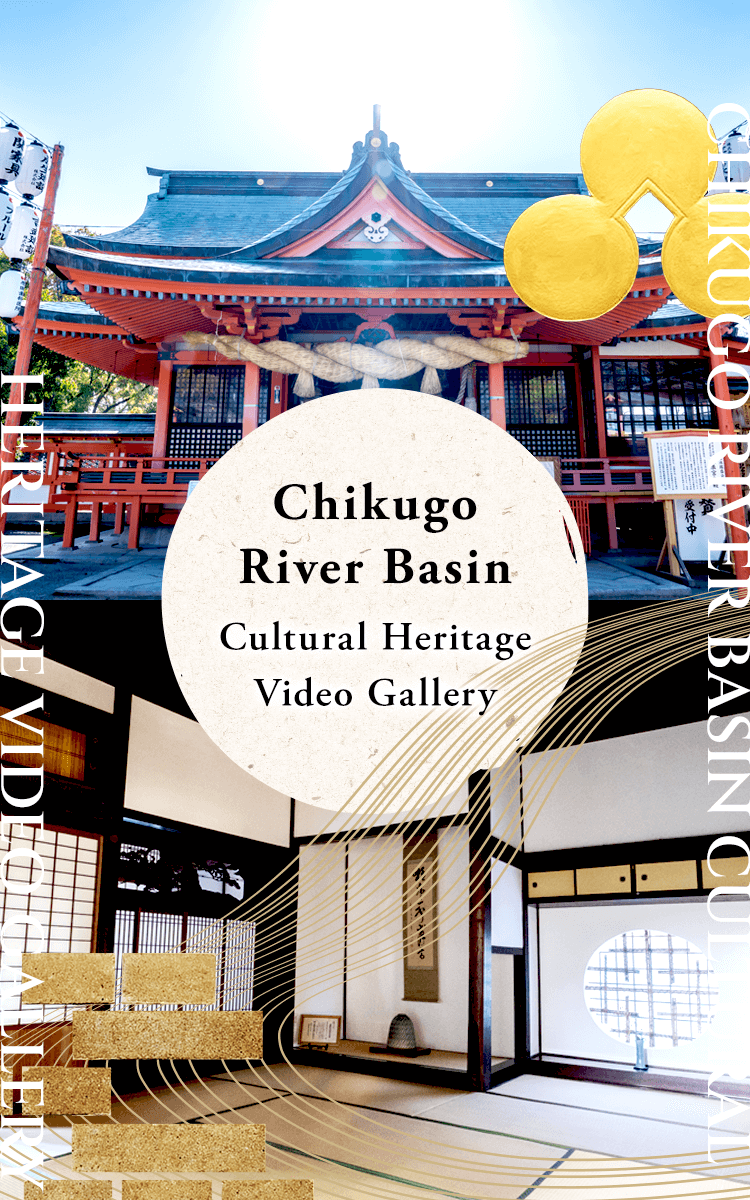
Here visitors can view the former residence of the Yoshihara family, built in 1825. It is also the site of Furogu Shrine, which has roots in the Azumi clan of skilled sailors and navigators and was established by imperial decree over 1,800 years ago.
Presenting Nationally Designated Important Cultural Properties in Okawa City, Fukuoka Prefecture.
Furogu Shrine Movie Gallery

The Main Hall of Furogu Shrine
The main hall was built around 1825 in the three-bay, nagare-zukuri style.
Designated a National Important Cultural Property, it enshrines the sea gods of Watatsumi no Mikoto.
The Five-storied Stone Pagoda
The five-storied stone pagoda was built in 1355 and features exquisite carvings.
It is a National Important Cultural Property that conveys a style unique within Japan.
The Heiden
The Heiden is the space which connects the main hall and worship hall. Rituals such as the Hikimengokito are performed here.
About Furogu Shrine
Furogu Shrine offers protection from the hazards of the wind and waves. Located at the northernmost tip of the Ariake Sea,it has served the sea deities since ancient times, offering prayers for the safety of the people at sea and for abundant marine harvests.
The Former Residence of the Yoshihara Family Movie Gallery

The Former Residence of the Yoshihara Family
This large mansion serves as the residence of the town headman. Built in 1825, the structure combines a reception room and private residence in a masterful display of craftsmanship.
Facing Outward: The Guest Reception Room
This space is a formal tatami-mat room which features a pine-bamboo-plum transom and kato-style windows. It is an historic space where craftsmanship breathes in every detail.
Facing Inward:The Private Living Quarters
The living quarters are laid out in the grid-like shape of a rice paddy and feature earthen floors.
It is an historic space which retains late Edo-period camphor wood beams and sashi kamoi lintels.
Brick Wall
This is a wall of slag bricks made from steel byproducts. The English bond technique conveys the echoes of that time to the present day.